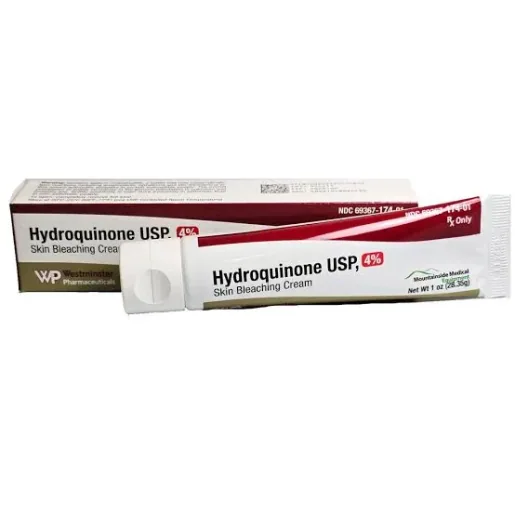
If you struggle with uneven patches, dark spots, or melasma that refuse to fade, this topical cream targets excess pigment right at the source. It helps fade stubborn discolorations over time so your natural complexion looks more balanced and clear.
Applying a thin layer daily works to slow down extra pigment formation. At WordPharmacy, you get dependable generic formulations packaged discreetly and shipped straight to your door without any retail markup.
When you decide to order Hydroquinone online, knowing what is Hydroquinone used for keeps expectations realistic, especially if you are wondering is Hydroquinone sold without prescription or seeking Hydroquinone over the counter. This medication is a topical depigmenting compound made to lighten skin patches that produce surplus pigment. Many patients use it for melasma, which appears as brownish symmetrical patches across the cheeks, forehead, or chin, as well as for solar lentigines from sun exposure.
Have you ever had an acne flare or bad scrape that left an annoying dark mark behind? That is post-inflammatory hyperpigmentation. A targeted cream helps clear those leftover spots once the initial swelling settles down. Prescribers also suggest it for freckles, poikiloderma on the neck, and discolouration linked to hormonal shifts.
Active formula
The active chemical compound here is hydroquinone, known systematically as benzene-1,4-diol or quinol. It is an aromatic organic compound derived from phenol. Dermatological preparations blend it into creams, gels, lotions, or emulsions, generally at concentrations between 1% and 5%.
The Hydroquinone 4 % strength is the usual clinical option for stubborn pigmentation, alongside mild 2% preparations. Prescribers sometimes suggest pairing it with topical tretinoin or a light corticosteroid like hydrocortisone. The core worker handling the pigment clusters remains hydroquinone itself.
Action mechanism
How does it actually lighten darker patches? The biological process centers on tyrosinase. Under normal conditions, tyrosinase turns tyrosine into melanin, which is the pigment that gives human skin and hair their color. Hydroquinone interferes directly by competing for the enzyme and reversibly blocking its activity.
Because the enzyme is blocked, skin melanocytes produce far less fresh pigment over their normal cycle. The drug also alters melanocyte internal structure, which gradually decreases cellular viability. As surface cells shed naturally, fewer heavily pigmented cells rise up to replace them. Dark patches fade over weeks of steady application.
Application rules
Applying the cream with the right Hydroquinone dosage and routine keeps skin calm while maximizing clearance. The standard process is simple:
Wash the skin gently with a mild cleanser and pat it completely dry.
Rub a thin layer directly onto each darkened spot twice daily, once in the morning and once before bed.
Avoid spreading cream over normal surrounding skin so you do not lighten unaffected areas.
Wash your hands with soap right after applying so your fingertips do not fade.
Always test a tiny dab on unbroken skin for 24 hours first. If intense redness, stinging, or swelling occurs, do not put it on your face.
Sunscreen is mandatory during treatment. Put on broad-spectrum SPF 30 or higher every single morning, even if it looks cloudy outdoors. UV rays trigger melanocytes almost immediately and can undo weeks of steady progress in a single afternoon.
Treatment duration
Patience matters when treating deep pigmentation. If you wonder how fast does Hydroquinone work, initial changes often appear around four weeks, while full clearing takes eight to twelve weeks. Clinical records indicate roughly 70% of patients with melasma see noticeable improvement after applying it twice daily for three months.
Do not use this cream continuously without a break. Most dermatologists advise applying it for three or four months, followed by two or three months off. If no visible lightening occurs after two or three months of daily application, stop using it and consult a dermatologist about other options.
Safety warnings
Most Hydroquinone side effects remain localized to the skin where you put the cream. You might feel minor stinging, mild redness, dry peeling, or slight itching during the initial weeks. These symptoms typically resolve once your skin gets used to the formula.
Careless or unmonitored use creates genuine problems over extended periods. The primary risk with prolonged, unmonitored use across many months is exogenous ochronosis. This is an uncommon condition where deep skin layers slowly develop a permanent blue-black discoloration. It does not wash off, which is why sticking to structured application cycles is necessary. If you notice strange dark speckling or paradoxical darkening, stop using the cream immediately.
Do not apply this product if you have known allergies to hydroquinone or sulfites. Never spread it over open cuts, active sunburns, or freshly shaved skin. Pregnant or nursing mothers should avoid topical hydroquinone because a measurable amount absorbs into the bloodstream.
Drug conflicts
Watch out for oxidizing ingredients before mixing products in your daily routine. Putting benzoyl peroxide or hydrogen peroxide on the skin alongside hydroquinone can cause temporary dark staining. If you use acne washes containing benzoyl peroxide, apply them at a completely different time of day.
Be careful when combining this treatment with strong exfoliants, such as glycolic acid or strong retinoids. Layering multiple peeling products simultaneously can provoke severe contact dermatitis. Simple, soothing hydration alongside your active treatment is the safest approach for your skin barrier.
Hydroquinone low price
Shoppers often hunt for a Hydroquinone low price by comparing product options online. Choosing generic formulations allows you to get the identical active strength without paying the heavy marketing markup attached to designer brand names. Concentration and container volume also influence your total out-of-pocket expense.
Ordering a slightly larger pack generally lowers the cost per gram, making a full multi-month treatment cycle much more affordable. Sourcing your medication through a verified digital supplier like WordPharmacy cuts out traditional retail overhead and passes those savings straight to you.
Buy Hydroquinone online
When you choose to buy Hydroquinone online, convenience and discretion are clear benefits. WordPharmacy keeps ordering simple, allowing customers to buy Hydroquinone without prescription queues or delays and select their needed concentration directly. Each order arrives packed in plain wrapping so your personal skin care choices remain confidential.
Tracking numbers keep you informed from initial dispatch until delivery at your door. With reliable manufacturing standards and straightforward ordering, clearing up stubborn skin pigmentation stays manageable.
FAQ
Can you drink alcohol with Hydroquinone?
Yes, drinking alcohol in moderation does not interact with this topical medication. Because you apply the cream directly to your skin, normal dietary choices and moderate drinking habits will not change the way it works.
What should I do if I miss an application?
Apply the cream as soon as you remember, unless it is almost time for your next scheduled application. Never put on a double layer to make up for a missed dose, as excess product only increases skin irritation.
Does Hydroquinone work on age spots?
Yes, it is routinely used for solar lentigines and age spots. Applying a small dab twice each day helps break down concentrated melanin clusters caused by chronic sun exposure.