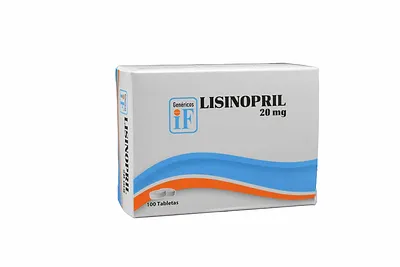
If you need to order Lisinopril online to manage hypertension or protect your heart muscle after a cardiac event, getting a dependable supply should not be a hassle. Lisinopril works by widening narrowed blood vessels so your heart can pump with far less strain across the day. At WordPharmacy, you get tested quality without paying high street retail markups. Learn how to take Lisinopril safely, check which Lisinopril dosage fits your daily routine, and get your tablets sent directly to your home.
Lisinopril is part of the ACE inhibitor class of cardiac drugs. Naturally your kidneys and vascular tissue produce angiotensin II, an enzyme byproduct that constricts arterial walls while prompting the body to retain extra sodium and fluid. Tight vessels force the heart muscle to generate intense pressure just to circulate blood. Lisinopril blocks that sequence directly.
Its active chemical form is lisinopril dihydrate, which binds to and inhibits angiotensin-converting enzyme. Without this enzyme functioning normally, blood vessels relax and widen out. Adrenal output of aldosterone drops too, prompting the kidneys to excrete excess fluid and sodium through regular urination. Pressure drops. The vascular resistance decreases noticeably, meaning the left ventricle does not have to strain against stiff arterial walls around the clock.
Conditions Lisinopril Treats Effectively
Clinicians prescribe this drug for a few distinct cardiovascular problems. If you are asking what is Lisinopril used for, here are the main clinical applications:
High blood pressure (hypertension): Lowers elevated vascular tension in adults and pediatric patients six years and older, reducing long-term stroke and myocardial infarction risks.
Heart failure: Prescribed alongside loop diuretics and digitalis to ease cardiac workload and prevent repeat hospital admissions.
Recovery after a heart attack: Started within 24 hours of an acute myocardial infarction to protect surviving tissue and improve survival odds.
Kidney protection in diabetes: Slows down diabetic nephropathy progression and reduces microalbuminuria in hypertensive diabetic patients.
Finding the Right Lisinopril Dosage for Your Routine
Arriving at the correct Lisinopril dosage requires routine monitoring by your doctor, because systemic vascular response varies between individuals.
For primary hypertension, adults typically start on 10 mg taken once daily. If systolic or diastolic numbers remain above clinical targets after two to four weeks, the prescriber often raises the amount up to a maintenance window between 20 mg and 40 mg daily. The ceiling dose is 80 mg daily, though very few patients ever require that much.
Heart failure management requires smaller starting quantities, usually Lisinopril 5 mg or even 2.5 mg once a day to avoid sudden drops in baseline pressure. Following an acute myocardial infarction, the established protocol starts with 5 mg within 24 hours, followed by another 5 mg the next morning, 10 mg on day three, and then 10 mg daily for six consecutive weeks. Patients with impaired renal clearance start lower, often at 2.5 mg or Lisinopril 5 mg, because the kidneys clear this compound from systemic circulation.
Taking Lisinopril Safely Each Day
You swallow the tablet whole with water, either alongside a meal or on an empty stomach. Food intake does not alter bioavailability or slow down digestive uptake. Consistency is what counts: take your tablet at roughly the same hour every day to keep circulating levels steady.
Many patients ask how fast does Lisinopril work? Blood pressure usually begins declining within an hour after ingestion, hitting peak effect around six hours. Because the elimination half-life supports a 24 to 30 hour duration of action, single daily dosing provides steady coverage. If you skip a dose by accident, take it as soon as you notice, unless your next scheduled pill is almost due. Never double up on pills to compensate for a missed day, because blood pressure can drop dangerously low.
Lisinopril Side Effects and What to Watch For
Most people tolerate this medication without incident, though unwanted symptoms can emerge. The most common complaint is a dry, hacking cough that resists ordinary throat lozenges. Bradykinin accumulation in lung tissue causes the irritation, and while it is medically harmless, it only resolves once you switch to a different drug class. Talk to your prescriber if the cough disrupts your sleep.
Other common reactions that tend to resolve after the first few weeks include:
Postural dizziness or feeling lightheaded when getting up quickly
Occasional dull headaches
Mild daytime fatigue or low physical energy
Mild digestive upset or loose stools
Call emergency medical services immediately if you experience swelling of the lips, tongue, face, or throat, or sudden trouble breathing. This reaction is angioedema, a rare but dangerous airway complication that requires immediate hospital intervention.
Because ACE inhibition reduces aldosterone, your kidneys retain more potassium. Do not take potassium salts or potassium dietary supplements without explicit lab testing and clinical clearance. Lisinopril is strictly contraindicated during pregnancy: exposure during the second and third trimesters causes severe fetal renal failure, skull hypoplasia, and potential neonatal death.
Medications That Interact with Lisinopril
Make sure your prescribing clinician has a full list of your current prescriptions and over-the-counter tablets before you begin treatment. Several common drug groups interact negatively with this medicine:
Nonsteroidal anti-inflammatory drugs (NSAIDs): Pain relievers like ibuprofen, naproxen, and high-dose aspirin can blunt blood pressure reduction and accelerate renal impairment.
Diuretics: Combining strong water pills with an ACE inhibitor can cause an excessive blood pressure dip during the first few days of combined therapy.
Lithium: Lisinopril reduces renal excretion of lithium carbonate, creating dangerous toxicity risks if serum levels are not checked frequently.
Neprilysin inhibitors (sacubitril/valsartan): Lisinopril must never be co-administered with sacubitril due to a severe angioedema risk. A strict 36-hour washout period is required between stopping one drug and starting the other.
Patients also frequently ask, can you drink alcohol with Lisinopril? Alcohol dilates peripheral vessels and magnifies the drug's hypotensive effect. A single beer or glass of wine can trigger unexpected dizziness or fainting, especially during your first weeks on the pill.
What Influences Lisinopril Price and Online Orders
Managing cardiovascular health requires continuous treatment, which is why securing a Lisinopril best price matters for monthly household budgeting. When you buy Lisinopril online, price shifts depend mainly on order quantity and whether you select generic tablets or brand-name packages like Zestril or Prinivil. Generic tablets use the identical active molecule, provide identical clinical outcomes, yet avoid expensive brand-name markups.
Choosing to order Lisinopril online in larger pack sizes through our Lisinopril online pharmacy lowers your unit cost per pill, avoiding the repeated retail markup seen at local dispensing counters. Ordering is straightforward: select your prescribed dose, add your delivery information, and complete payment through an encrypted gateway. Orders ship in plain, secure packaging with complete parcel tracking so your medical deliveries remain private from dispatch to arrival.
Frequently Asked Questions About Lisinopril
Can I take Lisinopril with my breakfast?
Yes. You can take your tablet with food or between meals without changing how the active drug gets absorbed into your bloodstream.
How long does Lisinopril last in the body?
A single dose maintains clinical activity for roughly 24 to 30 hours, which is why once-daily administration provides stable 24-hour blood pressure control.
What should I do if I get dizzy after taking my dose?
Dizziness usually happens early in treatment when arterial tension drops. Sit or lie down right away until the sensation clears, and stand up gradually from chairs or bed to give your circulation time to compensate.
Can I drink alcohol while taking Lisinopril?
Keep alcohol consumption to an absolute minimum. Alcohol increases peripheral vasodilation, which can drop your blood pressure too fast and cause lightheadedness or balance issues.