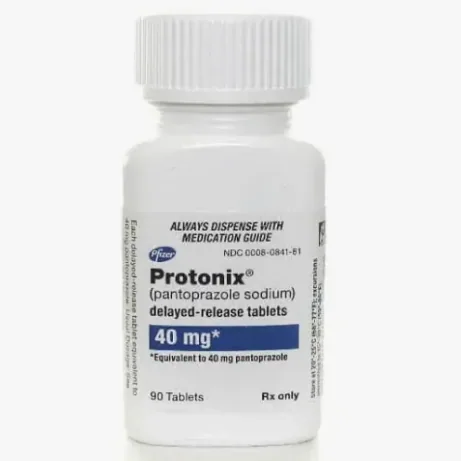
Protonix tablets shut down excess gastric secretions right at the gastric pump. If chronic acid backwash or an inflamed esophagus leaves you hurting each night, this daily dose provides sustained relief so damaged lining can mend itself without constant burning.
Stomach acid breaks down heavy meals easily enough, but trouble starts when that acid climbs backward into the esophagus. Standard chewable antacids barely touch severe reflux. When patients decide to buy Protonix 40 mg for persistent chest burn, they usually want to know what is Protonix used for and how it alters gastric pH over a full day. Understanding the drug helps you get the best outcome from your daily regimen.
Check how Protonix stops acid before starting treatment
Pantoprazole sodium sesquihydrate is the active compound in Protonix tablets, grouped clinically as a proton pump inhibitor. Inside the stomach wall, specialised parietal cells rely on an enzyme system called the hydrogen-potassium ATPase pump to dump acid into the stomach chamber. Pantoprazole covalently binds to this specific enzyme, blocking the final transport step. The bond lasts until the cell synthesises new pumps. Because of that covalent link, questions about how long does Protonix last have a straightforward answer: acid suppression continues for well over 24 hours from a single dose.
Physicians direct this medicine primarily at erosive esophagitis, where gastric acid has eaten visible lesions into the lower food pipe. It is also prescribed for hypersecretory states like Zollinger-Ellison syndrome, an uncommon endocrine condition where gastrin-producing tumours trigger massive acid surges. In clinical practice, doctors also pair it with clarithromycin and amoxicillin to eradicate Helicobacter pylori bacteria. Some patients take it off-label to prevent gastric ulcers during chronic therapy with nonsteroidal anti-inflammatory drugs like naproxen or ibuprofen.
Choose the right Protonix dosage for your stomach issues
The prescribed Protonix dosage matches the severity of tissue damage rather than subjective pain alone. For active healing of erosive esophagitis from GERD, adults take Protonix 40 mg once daily every morning. Controlled trials showed that eight weeks of continuous dosing heals up to 93 percent of mucosal breaks. If an endoscopy still reveals unresolved erosions after two months, a clinician may prescribe a second eight-week course. For maintenance to stop erosions from returning, Protonix 20 mg daily is common, though some patients remain on 40 mg.
Hypersecretory conditions demand substantially more active drug. Zollinger-Ellison patients routinely start at 40 mg twice daily, with daily totals titrated upward past 160 mg when stomach acid output remains too high. Renal impairment requires no dose adjustments, as the kidneys only eliminate inactive metabolites. Mild to moderate hepatic impairment rarely demands a lower dose either. Severe cirrhosis is a different matter: clinicians generally cap the dose at 20 mg per day because hepatic clearance slows down substantially.
Take your tablets whole with a glass of water
Knowing how to take Protonix correctly prevents treatment failure. You must swallow delayed-release Protonix tablets whole with water. Never chew, crush, or break them apart. The pills carry an enteric coating that resists the low pH of gastric juice. If you crack the outer shell, stomach acid destroys the pantoprazole molecule before it ever reaches the alkaline environment of the proximal duodenum where absorption happens.
Take the tablet thirty minutes before morning breakfast. While food does not alter total absorption, taking it prior to eating ensures peak plasma concentrations coincide with meal-stimulated pump activation. If you miss your morning tablet, swallow it as soon as you remember that afternoon. However, if your next regular dose is just a few hours away, skip the forgotten pill entirely. Doubling up pills increases side effect risks without adding extra acid reduction.
Watch out for common Protonix side effects early on
Most patients tolerate pantoprazole without difficulty, but minor Protonix side effects do show up during the initial week of therapy. Clinical trials reported several transient complaints:
Morning headaches
Nausea and stomach ache
Diarrhea or loose stools
Intestinal gas and abdominal distension
Mild dizziness
Joint aches
Most of these mild symptoms subside once your gut adapts. Extended PPI use over several years carries more significant clinical considerations. Acid suppression reduces the absorption of food-bound cobalamin and ionized magnesium, which can lead to hypomagnesemia after a year of continuous use. Prolonged treatment also correlates with a modest rise in bone fracture risk, especially at the hip and spine in older adults. If persistent, watery diarrhea develops during therapy, contact a doctor quickly: reducing stomach acidity allows opportunistic pathogens like Clostridium difficile to take hold.
Review your current medicines to prevent dangerous interactions
Because pantoprazole elevates intra-gastric pH, it directly alters the solubility and systemic absorption of other oral medications. Drugs requiring acidic conditions to dissolve—such as ketoconazole, itraconazole, and iron salts—show marked drops in bioavailability. Antiretroviral agents like rilpivirine and atazanavir also lose therapeutic efficacy when co-administered with PPIs, creating a genuine risk of viral resistance.
Patients taking warfarin need frequent INR monitoring, since combining it with pantoprazole may prolong prothrombin time and increase bleeding events. Concomitant administration of high-dose methotrexate can elevate serum methotrexate levels, increasing toxicity risks. Pantoprazole has a notably lower affinity for the CYP2C19 enzyme than omeprazole, which reduces the chance of dangerous interactions with antiplatelet drugs like clopidogrel. Still, keep your full prescription list updated with your pharmacist.
Buy Protonix without prescription after reviewing your options
Finding a fair Protonix price shouldn't require jumping through endless pharmacy hurdles. When you choose to buy Protonix online through a reputable Protonix online pharmacy, you avoid retail markups and high dispensing surcharges. Many patients ask: is Protonix sold without prescription? Licensed international suppliers allow you to buy Protonix without prescription by using structured medical questionnaires reviewed by certified clinicians. Choosing generic pantoprazole over brand-name pills keeps Protonix cheap while delivering identical bioequivalence and therapeutic relief.
When you buy Protonix through our service, you get the Protonix best price by selecting multi-month bulk supplies rather than smaller monthly packages. We prioritize Protonix fast delivery, shipping your order in discreet, unbranded parcels to protect your medical privacy. Each package comes with end-to-end parcel tracking, so you always know when your acid reflux relief arrives at your door.
Frequently Asked Questions
How fast does Protonix work to relieve symptoms?
Pantoprazole enters the bloodstream rapidly, but it does not neutralize existing acid like an antacid liquid. Most patients experience noticeable symptom relief within two to three days of regular morning use, while maximal acid inhibition and tissue healing occur after seven days.
Can I drink alcohol while taking these tablets?
Ethanol does not deactivate pantoprazole chemically, but it directly inflames gastric mucosa and triggers reflex acid production. If you take this medication to heal erosive esophagitis or a peptic ulcer, drinking wine or spirits directly undermines the healing process.
What should I do if my heartburn returns after stopping?
Abruptly stopping a proton pump inhibitor often triggers rebound acid hypersecretion, where parietal cells release excessive acid for several days. Discuss a gradual taper with your physician, such as stepping down to an alternate-day schedule over two weeks before discontinuing completely.