Clear breakouts and smooth sun damage with Tretinoin Cream
Tretinoin Cream is one of the most trusted topical retinoids around. Whether you are struggling with stubborn acne breakouts or looking to soften fine lines and sun spots, this vitamin A treatment works deep down by speeding up natural skin cell renewal.
Anyone digging into dermatological treatments inevitably runs into retinoids. When patients decide to buy Tretinoin Cream, they usually want a dependable fix for chronic cystic acne or persistent sun spots. Chemically, the active compound is all-trans retinoic acid, an acid form of vitamin A. Cosmetic retinol serums sold over the counter require two internal metabolic conversions before interacting with skin tissue. Tretinoin skips those conversion steps entirely, binding straight to nuclear receptors inside keratinocytes.
What Tretinoin Cream does for your skin
People asking what is Tretinoin Cream used for usually hear about acne vulgaris first. The compound clears stubborn comedones, papules, and deeper inflammatory pustules. Clinicians also prescribe it to treat photoaging, the cumulative dermis damage showing up as coarse wrinkles, mottled hyperpigmentation, and rough leathery patches. It reshapes epithelial structure by forcing sluggish basal layers to behave like younger tissue. The cream modifies dermal gene expression:
Unclogs follicular infundibula by loosening cohesion between dead corneocytes
Suppresses inflammatory cascades to soothe tender, inflamed red lesions
Evens out dermal melanin pooling left behind by older acne cysts
Stimulates type I procollagen synthesis in the papillary dermis to soften fine creases
How Tretinoin Cream acts on cellular turnover
Underneath your epidermis, keratinocytes normally take roughly 28 to 40 days to travel from the basal membrane to the stratum corneum. Tretinoin binds retinoic acid receptors (RAR-beta and RAR-gamma specifically), which accelerates mitotic activity in the basal layer. The turnover rate doubles. Old follicular debris cannot accumulate with sebum, preventing the initial microcomedone plugs that feed Cutibacterium acnes.
Instead of sticking together, surface squames slough away freely. Healthy nucleated cells take their place. Over months, this sustained desquamation compacts the stratum corneum while visibly thickening the living epidermis. Clinical biopsies consistently show denser collagen bundles beneath the junction line, explaining why skin texture feels firmer and looks far more uniform after sustained treatment.
Putting Tretinoin Cream on your face the right way
Applying topical retinoids requires restraint. Spreading a thick layer will not speed up improvements, but it will provoke acute retinoid dermatitis with raw peeling and itching. A single pea-sized dab holds enough active medication for your whole face. Knowing how to take Tretinoin Cream properly prevents unnecessary treatment dropouts:
Cleanse thoroughly using a mild, non-stripping facial wash and gently pat dry with a clean towel.
Wait 20 to 30 minutes before spreading the cream. Damp skin increases transdermal penetration speed, which triggers acute stinging.
Dot that pea-sized amount evenly across forehead, cheeks, and chin, smoothing outward while avoiding the eyelid margins, nasolabial folds, and lip borders.
Layer a plain ceramide moisturizer on top once the medication settles.
Always apply your dose at night. Ultraviolet light degrades retinoic acid molecules rapidly, rendering daytime applications chemically unstable and largely ineffective.
What to expect while Tretinoin Cream starts working
Expect your skin to look worse before clearing up. During the initial four weeks, known clinically as retinization or the purge, rapid desquamation pulls subclinical microcomedones to the surface simultaneously. Patients often wonder how fast does Tretinoin Cream work when facing sudden dry flaking, erythema, and transient pustules. Inflammatory acne typically stabilizes by week six, with substantive clearing documented between eight and twelve weeks.
Smoothing fine lines and reversing photoaging takes patience. Visible collagen restructuring generally demands three to six months of steady nightly use. And how long does Tretinoin Cream last? Benefits continue only while you maintain application, because cell turnover reverts to its baseline pace once you abandon the regimen.
Tretinoin Cream side effects and safety cautions
Retinoid therapy carries clear safety rules. Typical local reactions include transient erythema, localized scaling, stinging, and burning sensations. These side effects soften as epidermal tolerance develops over four to eight weeks. However, definite medical exclusions apply:
Pregnant patients: Retinoids are teratogenic. While systemic absorption from topical cream is minimal, women who are pregnant or planning conception must avoid the drug entirely.
Nursing mothers: It remains unconfirmed whether trace retinoic acid passes into human breast milk, so medical clearance is necessary.
Compromised skin: Never apply over open abrasions, severe eczema flare-ups, or active sunburns.
The drug thins the stratum corneum, leaving you vulnerable to severe sunburn. Applying a broad-spectrum sunscreen rated SPF 30 or higher every morning is mandatory.
Mixing Tretinoin Cream with other skincare products
Streamline your routine when starting this treatment. Stacking aggressive acne agents dismantles the protective lipid barrier. Cleansers containing benzoyl peroxide, salicylic acid, glycolic acid, or sulfur will amplify irritation and flaking if layered directly with retinoic acid.
When dual therapy is clinically necessary, split the applications: use benzoyl peroxide in the morning and reserve tretinoin for bedtime. Avoid alcohol-based astringents, toners, and physical face scrubs. Also, pause your applications at least five days before any planned facial waxing to avoid mechanical skin tearing.
Tretinoin Cream price factors and ordering
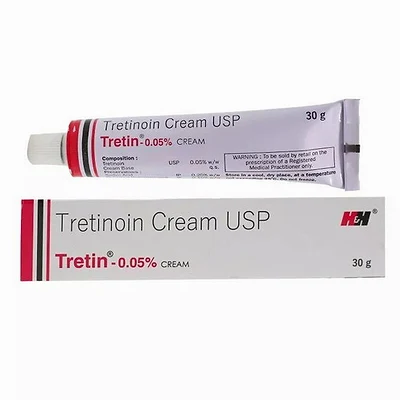
Browsing your options reveals that finding a Tretinoin Cream low price depends largely on concentration and manufacturer. Formulations come standard in 0.025%, Tretinoin Cream 0,05 %, and 0.1% strengths. Most patients who buy Tretinoin Cream online choose the 0.025% strength as an introductory tier to build tolerance without excessive peeling before moving upward.
Choosing generic tubes secures the Tretinoin Cream best price while keeping your expenses reasonable. Generic all-trans retinoic acid contains identical chemical bioequivalence without the branding markup. Buying multi-packs from a pharmacy often yields a lower cost per gram, helping reduce long-term expenses for chronic maintenance.
Getting Tretinoin Cream fast delivery at WordPharmacy
Waiting weeks for clinic visits or queueing at retail counters is unnecessary. As a dedicated Tretinoin Cream online pharmacy, WordPharmacy allows you to order your dermatological supplies straight from your desk. When you need Tretinoin Cream fast delivery, our streamlined dispatch packs your order into plain, discreet parcels right away.
You can check available strengths, review tube volumes, and secure an order without unnecessary friction. Packages arrive directly at your door so your evening application routine continues without interruption.
Frequently Asked Questions about Tretinoin Cream
How to take Tretinoin Cream if you miss a night?
Skip the missed application and continue with your normal pea-sized quantity the next evening. Never double up doses to compensate. Applying extra cream only inflames your epidermal barrier.
Can you drink alcohol with Tretinoin Cream?
Yes. Systemic absorption of topical tretinoin is negligible, so moderate alcohol consumption does not produce chemical interactions. Just avoid facial toners formulated with denatured alcohol, which cause severe surface dehydration.
Is Tretinoin Cream sold without prescription?
Dispensing regulations differ internationally. While local pharmacies often demand an in-person prescription, verified digital platforms permit orders after evaluating an online clinical health questionnaire.
Can I put moisturizer on right after applying the cream?
Waiting 15 to 20 minutes allows the active retinoid to penetrate properly. For reactive skin, applying moisturizer first creates a buffer that softens irritation without extinguishing efficacy.