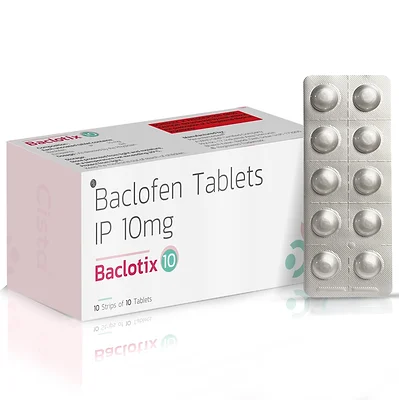
Baclofen is an effective skeletal muscle relaxant used to relieve stiff, rigid muscles and sudden spasms caused by spinal injuries or conditions like multiple sclerosis. It works within the nervous system to ease muscle tension, helping you regain everyday mobility and daily comfort.
Living with muscle stiffness or painful contractions makes everyday movement an exhausting chore. When patients look to buy Baclofen without prescription obstacles and manage severe involuntary tightness, knowing what the drug actually does helps set realistic expectations. Baclofen is an antispasmodic compound that quiets overactive motor paths so hypertonic muscles can loosen up.
What Baclofen Is and What It Treats
Baclofen belongs to the skeletal muscle relaxant class and functions as a central nervous system depressant. The active compound baclofen is a chemical analogue of GABA, which is the primary inhibitory neurotransmitter in the mammalian central nervous system. People frequently ask what is Baclofen used for across outpatient neurology clinics. Prescribers primarily turn to it for chronic spasticity tied to specific neurological damage:
Multiple sclerosis (MS)
Spinal cord lesions and traumatic spinal cord injuries
Cerebral palsy
Traumatic brain injury
Meningitis and motor neuron disease
It cuts down flexor spasms, sustained clonus, and painful nocturnal cramping. The drug does not help ordinary aches from strain, nor does it relieve standard rheumatologic joint pain.
How Baclofen Tablets Work in the Body
When muscle tone stays abnormally high, spinal reflex arcs fire continuous, unregulated signals straight to peripheral muscle fibres. Baclofen tablets quiet this circuit by binding selectively to presynaptic GABA-B receptors across the dorsal horn of the spinal cord and brainstem. That binding triggers two cellular shifts:
It restricts calcium influx into presynaptic terminals, stopping the exocytosis of excitatory neurotransmitters like glutamate and aspartate.
It increases potassium conductance across the postsynaptic membrane, hyperpolarizing the nerve cells and raising the threshold required to trigger an action potential.
Monosynaptic and polysynaptic spinal reflexes settle down. The resulting drop in muscle resistance lets people bend their limbs, transfer out of bed, and carry out physical rehabilitation with much less discomfort.
How Long Baclofen Takes to Work and Last
Absorption happens fast across the gastrointestinal tract, with roughly 70 to 85 percent bioavailable after oral intake. Patients wondering how fast does Baclofen work can expect clinical onset within 60 to 120 minutes, with peak serum concentrations recorded around two to three hours post-ingestion. When considering how long does Baclofen last, its elimination half-life ranges from 2 to 6 hours in healthy adults, meaning symptom control persists roughly 4 to 8 hours. This short metabolic window explains why divided dosing three or four times throughout the day is necessary to prevent spasticity from breaking through.
Baclofen Dosage and Daily Administration
Titration requires patience. Starting at a minimal dose minimizes excessive daytime sedation. A typical adult Baclofen dosage regimen starts with 5 mg administered three times daily for the initial three days. Clinicians then guide how to take Baclofen by titrating upwards in 5 mg increments per dose every three days until achieving target spasm reduction. Routine maintenance lands between 30 mg and 80 mg daily, distributed across three or four equal administrations. Taking more than 80 mg in twenty-four hours is avoided because higher amounts raise toxicity risks without offering additional functional gains.
Patients frequently choose to buy Baclofen 10 mg or buy Baclofen 25 mg strengths depending on their prescribed titration step and where they find Baclofen low price options. Swallow each tablet with water, either with food or without meals. Taking it with a small snack or a cup of milk is helpful if gastric irritation occurs. If you miss a dose, take it when you remember, unless the next scheduled intake is already close. Never double the dose. Do not discontinue this drug abruptly under any circumstances. Rapid withdrawal causes acute autonomic instability, hyperthermia, hallucination, severe rebound spasticity, and life-threatening seizures. Any dose reduction must happen gradually over one to two weeks.
Who Should Avoid Baclofen Tablets
Contraindications exist for this compound. Anyone with demonstrated hypersensitivity to baclofen or tablet excipients must not use it. Safety data remain inadequate for individuals managing post-stroke spasticity or Parkinson disease, where the drug may worsen underlying ataxia or mental clouding.
Careful clinical supervision is mandatory for patients with:
Renal impairment, because up to 85 percent of an oral dose clears through the kidneys unchanged.
A history of epilepsy, since the compound lowers seizure thresholds.
Pre-existing psychiatric disorders, confusion states, or autonomic dysreflexia.
Recognizing Baclofen Side Effects
Adverse effects stem directly from central nervous system depression. Many of these side effects taper off after a few weeks of consistent therapy. Common reactions include:
Somnolence, sedation, and general fatigue
Dizziness, lightheadedness, and reduced balance
Nausea, xerostomia, and constipation
Headaches, hypotonia, and localized muscle weakness
Insomnia, confusion, and urinary frequency or retention
Because sedation is common, do not drive, operate heavy equipment, or complete hazardous physical duties until you know how the compound alters your psychomotor speed. Immediate medical intervention is required if respiratory depression, profound confusion, or severe allergic angioedema develops.
Can You Drink Alcohol with Baclofen and Other Drug Mixes?
So, can you drink alcohol with Baclofen? The answer is an unambiguous no. Ethanol and baclofen both amplify inhibitory neurotransmission. Combining them causes severe central nervous system depression, extreme sedation, marked hypotension, and dangerous respiratory arrest.
Dangerous interactions also involve:
Opioid analgesics, benzodiazepines, and non-benzodiazepine hypnotics
Sedating first-generation antihistamines and skeletal muscle relaxants
Antihypertensive agents, where baclofen can trigger pronounced blood pressure drops
Tricyclic antidepressants and monoamine oxidase inhibitors
Ordering Through a Baclofen Online Pharmacy
Managing long-term spasticity requires continuous access to therapy. Choosing a reputable Baclofen online pharmacy lets patients bypass conventional retail markups while securing verified generic formulations. Bioequivalent Baclofen tablets supply identical therapeutic action to original trade-name drugs while keeping treatment affordable. When looking to buy Baclofen online, selecting larger multipacks reduces your final unit cost, making Baclofen cheap relative to local counter prices.
People checking whether is Baclofen sold without prescription or seeking Baclofen over the counter options still need to review their specific medical profile before beginning therapy. Transparent customer Baclofen reviews confirm that placing an order Baclofen online through WordPharmacy delivers clear savings. Every dispatch features Baclofen fast delivery in discreet, unmarked parcels with full door-to-door tracking, ensuring your treatment arrives reliably and securely.
FAQ
How fast does Baclofen work after taking a tablet?
Oral tablets begin reducing tone within 60 to 120 minutes. Maximum therapeutic concentration in the bloodstream typically occurs between 2 and 3 hours after swallowing the medication.
Can I stop taking Baclofen once my spasms feel better?
No. You must never discontinue treatment abruptly. Halting the drug without a slow taper can precipitate dangerous withdrawal symptoms, including rebound spasms, hyperpyrexia, delirium, and seizures.
Should I take my dose with food?
You can take tablets with or without meals. If you experience stomach irritation or nausea, swallowing the dose with food or milk helps minimize gastrointestinal discomfort.
What is the maximum daily dose for adults?
The standard maximum adult dose is 80 mg per day, divided across three or four separate doses. Exceeding this daily ceiling significantly increases the incidence of severe adverse reactions without providing superior muscle relaxation.